BIM Audit: What Gets Checked in a Model and Who Does It
To encourage investment in the implementation of BIM methodologies, it is essential to ensure the benefits of using models throughout project development, such as cost and time savings in project management.
For this reason, audit processes are increasingly required to enable the different stakeholders to ensure the BIM potential and quality of models when information is transferred between different project phases.
Why perform a BIM audit?
The life cycle of a BIM model is extensive, covering everything from the project design phase to operations and maintenance and, finally, decommissioning or demolition.
For this reason, it is important to ensure the quality of the information that will be transferred, expanded or modified within our BIM models throughout all these phases.
It is important to consider that, in addition to complying with local regulations and project requirements, the information must also comply with the standards and specifications defined in the BIM collaboration document between stakeholders — the BIM Execution Plan or BEP.
This highlights the importance of keeping project information continuously updated and reviewed through the implementation of different types of periodic audits:
Types of audits
The most important aspect of a good Audit Plan is that it is adapted to the specific requirements of each project and ensures consistency in the analysis throughout the entire project lifecycle.
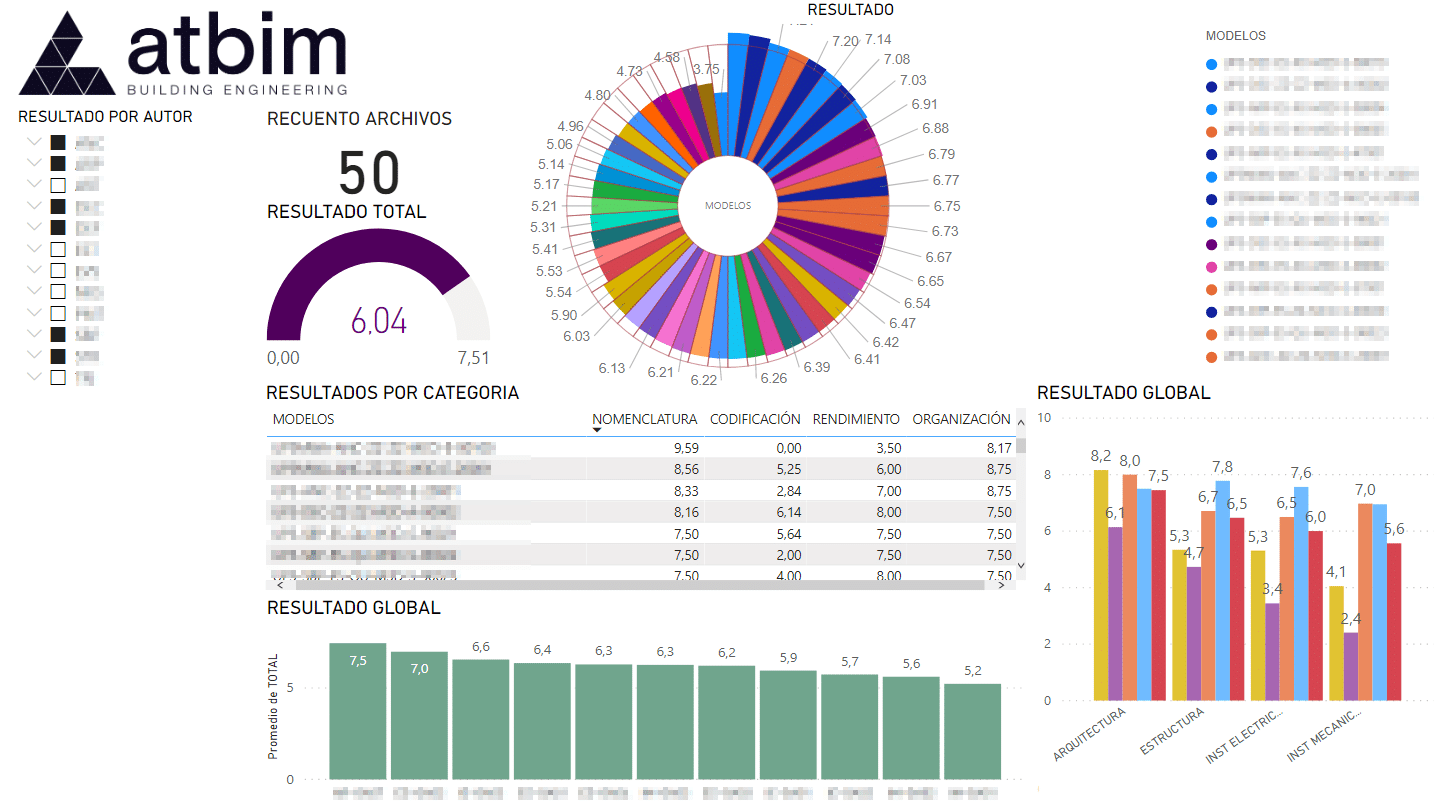
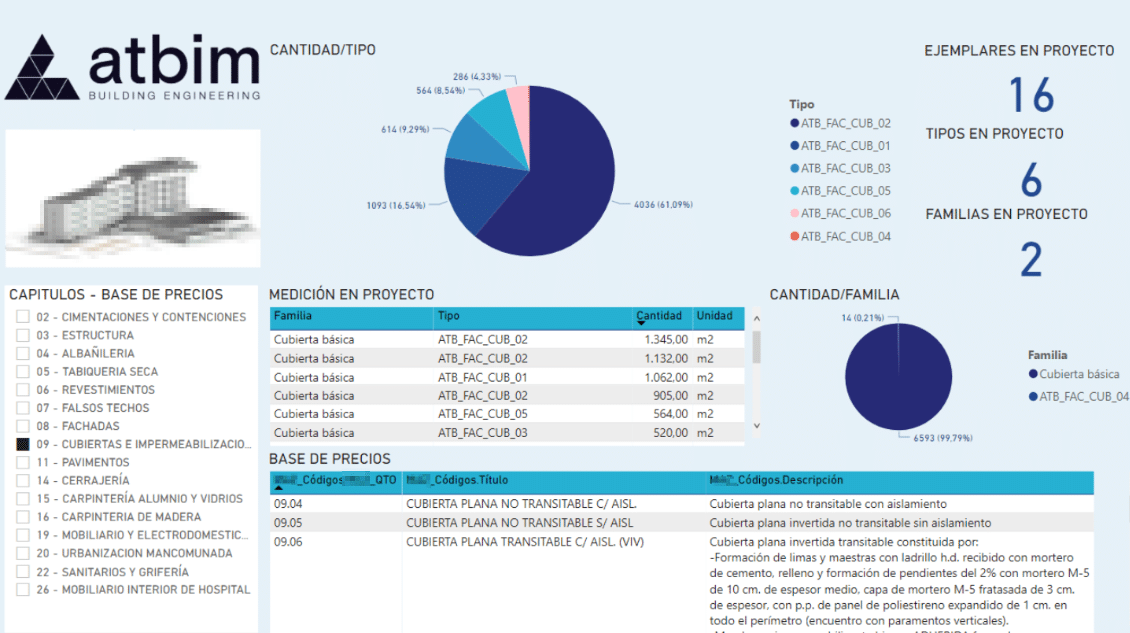
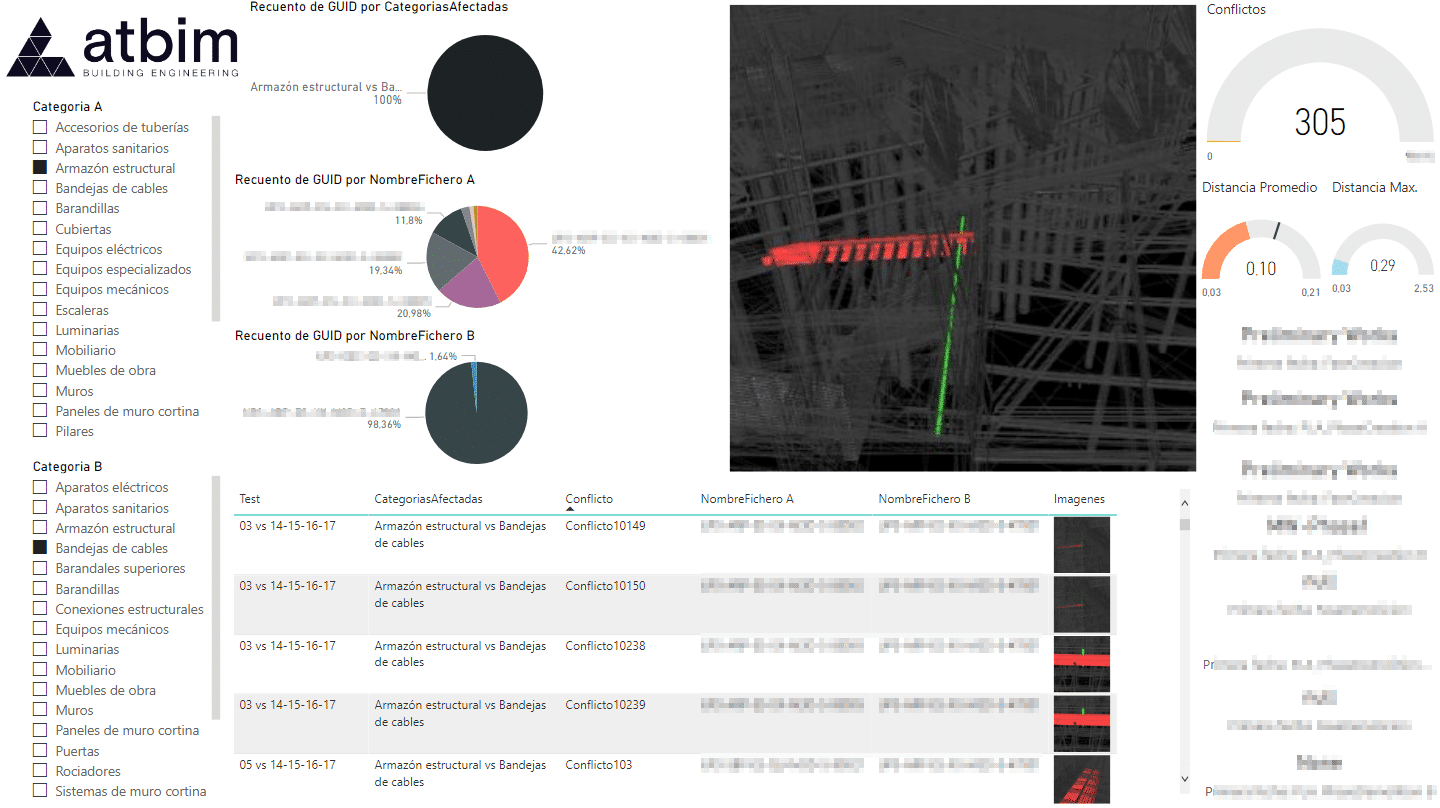
Performing audits allows the information manager to obtain a global overview of the model’s current status and viability. To achieve this, visualization tools should be used to support information analysis and control. Below are several examples of these tools developed as dashboards by ATBIM, depending on the type of audit:
Dashboard for standards compliance auditing in BIM models
Dashboard for quality control and quantity auditing of elements contained in BIM models
Dashboard for coordination and clash detection auditing based on clash tests performed between different models
Who performs the audits?
Audit processes should be carried out periodically and in parallel with model development. This internal quality control monitoring process usually falls under the responsibility of each team’s BIM Coordinator. However, developing the necessary tools or carrying out general audits when information is transferred between different project phases can be complex tasks that often require the support of an external team with experience in this type of work.
At ATBIM, as “Managers of the digitalization of information and processes, and the development and implementation of BIM methodology” certified under ISO 19650, we have specialized in developing visualization tools that allow us to perform these audits quickly, efficiently and according to the specific needs of each project.
If you need to perform a BIM model audit, require more information or would like to discuss this topic with us, please do not hesitate to contact us.